
Climate Adaptation
Using our growing understanding of the current and future impacts of climate change requires a complex combination of skills, capacities, and resources. This includes access to the latest available climate data, new stories to tell about the future, hearing from diverse perspectives including those with lived experience of climate impacts, and the ability to navigate complexity and uncertainty.
The University of Exeter has a variety of resources and research themes to support organisations, groups, and networks to understand adaptation, and take informed action in a rapidly changing world.
LCAT (the Local Climate Adaptation Tool)
LCAT is a free evidence-based decision support tool to explore how local climates will change, what the impacts may be, who will be vulnerable, and which adaptations to consider.

Adaptation Community of Practice
The Adaptation CoP is a free, open network for anyone working in or around adaptation. We meet monthly to share good practice, discuss live questions, and acknowledge systemic challenges.
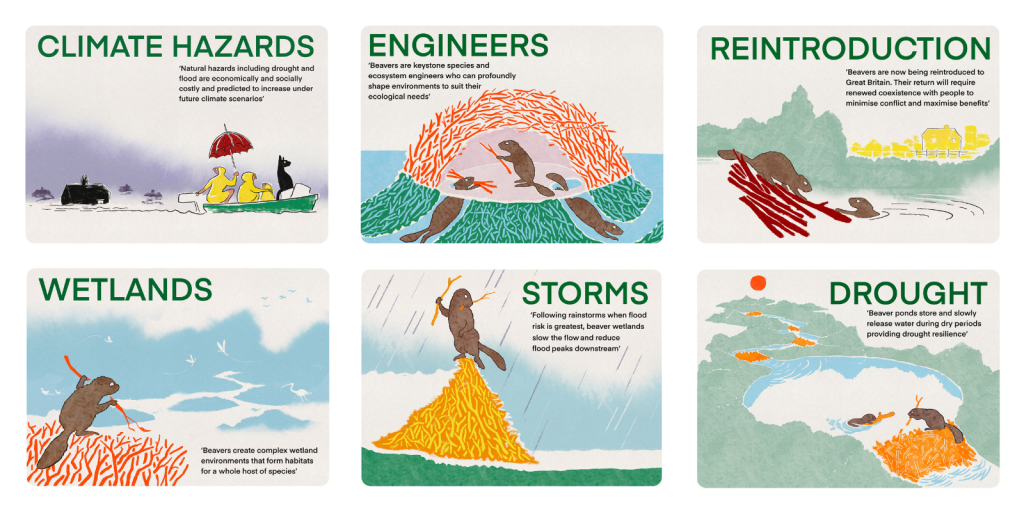
Beavers as ecosystem engineers
What impact do beavers have on their environments? Can they actually play a role in natural flood management? This artwork by More than Minutes illustrates research by the University of Exeter’s Dr Alan Puttock, working with the Cornwall Wildlife Trust, Devon Wildlife Trust and others.
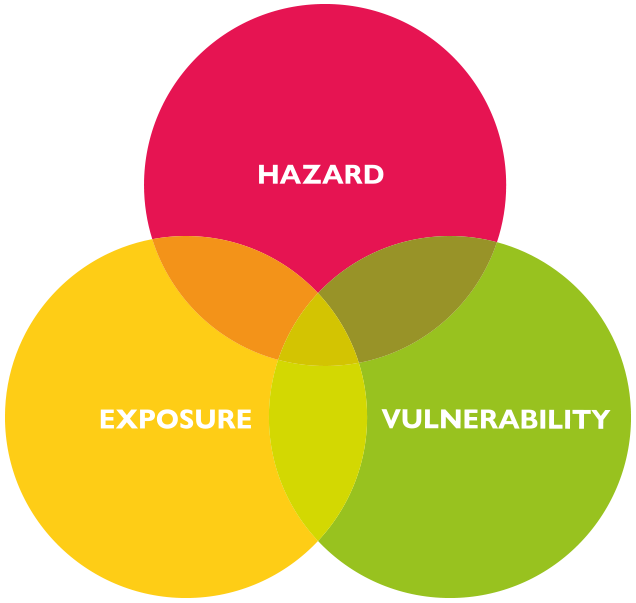
CLIMAR: climate change risks
The Climate Impacts, Mitigation, Adaption and Resilience (CLIMAR) Framework tool is a crucial tool in designing pathways to NetZero and enhancing resilience to climate change.
Created with the Met Office, CLIMAR creates decision-ready information on climate impacts for policy makers, industry and the public.
CLIMAR uses Data Science and AI to quantify and visualise the risks on populations, infrastructure and the economy.

Changing Places Storymap
This storymap is a living, growing archive of places where people are developing the skills to work with dynamic change, rather than resist it.
It is a project of the Adaptive Heritage Practice Lab (AHPL), a community of researchers and practitioners united by a shared interest in how we can care for places and things that are coming apart – and coming together again – in unpredictable ways.